
Complex joint replacement in Rome
Prosthetic revisions, periprosthetic infections, severe and post-traumatic deformities: cases that require dedicated experience and advanced planning.
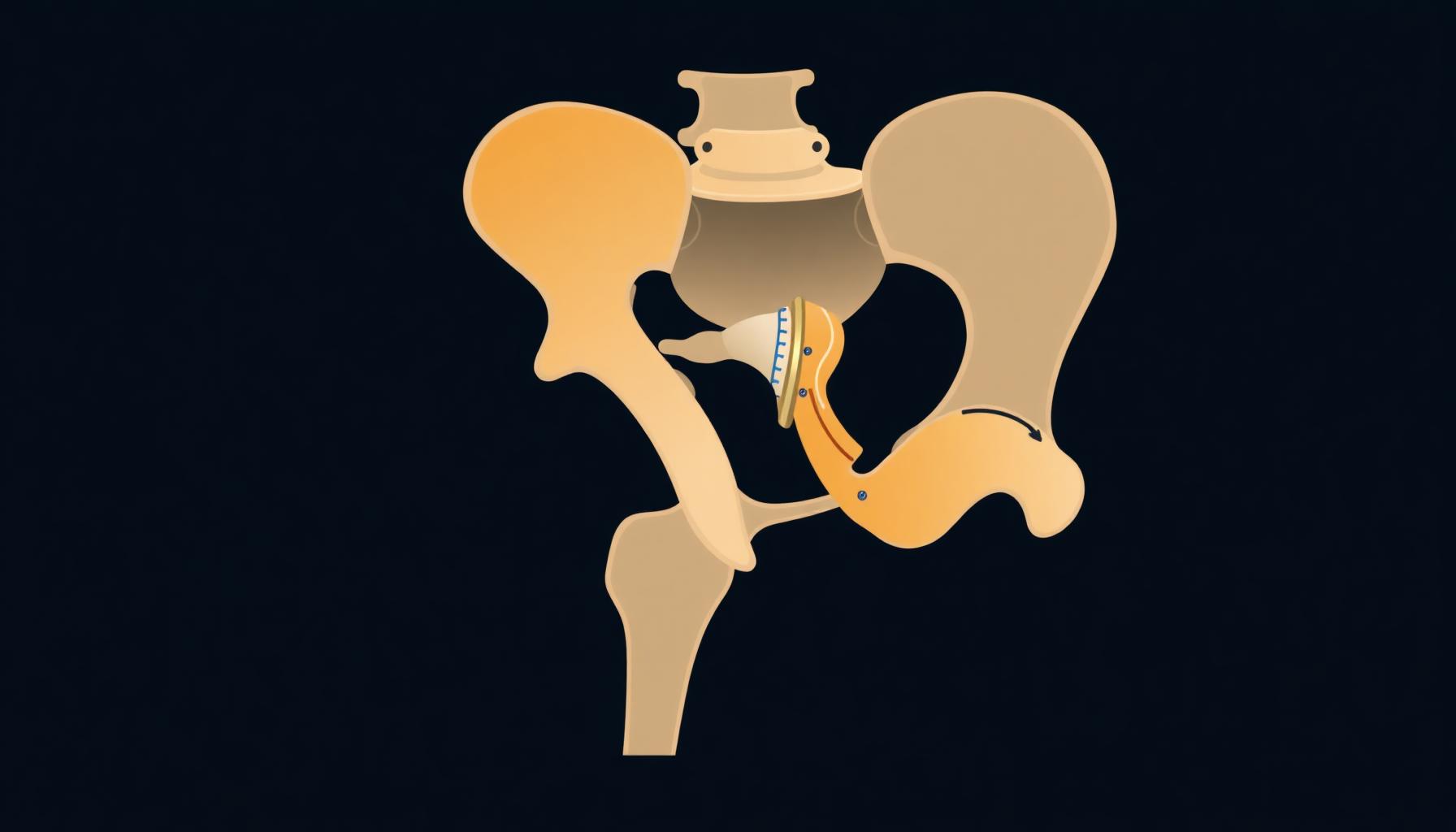
Complex joint replacement refers to procedures that go beyond a standard first prosthesis: revision of knee, hip and shoulder replacements, treatment of periprosthetic infections and correction of severe or post-traumatic deformities.
These cases require in-depth specialist assessment, advanced imaging, three-dimensional planning and — when indicated — the use of computerised navigation or robotic platforms.
Prof. Simone Cerciello, with over 9,000 procedures performed, devotes a significant part of his surgical activity to these complex scenarios, within a pathway that always involves a multidisciplinary team.
Revision of knee, hip and shoulder prostheses
When an existing prosthesis no longer works as it should.
When a revision is needed
- Component wear many years after implantation
- Aseptic loosening: the prosthesis loses its stable fixation to the bone
- Recurrent instability or repeated dislocations
- Persistent pain with a documented mechanical cause
- Periprosthetic fractures around the implant
- Periprosthetic infection (see dedicated section)
How it differs from a first replacement
Revision requires removal of the previous components, reconstruction of any bone defects with grafts or augments, and implantation of revision prostheses, often with longer stems and greater constraint. It is a longer, technically demanding procedure that requires dedicated implants and instrumentation.
The three joints
Revision concerns all the major joints: knee (loosening, instability, polyethylene wear), hip (stem or cup loosening, recurrent dislocations, bearing wear) and shoulder (failed anatomical prostheses, often converted to reverse prostheses).
Treating prosthetic joint infections
Diagnosis
A suspected prosthetic infection is investigated with blood tests (CRP, ESR), joint aspiration with culture and, when necessary, advanced imaging. Identifying the responsible microorganism is decisive for guiding antibiotic therapy and the surgical strategy.
One-stage or two-stage approach
In early infections with a known organism and good tissue conditions, a single-stage procedure (removal and reimplantation in the same session) may be possible. In chronic infections or with aggressive organisms, the two-stage approach is preferred: prosthesis removal, placement of an antibiotic-loaded spacer, targeted antibiotic therapy and reimplantation once the infection has healed.
The role of the multidisciplinary team
Treating periprosthetic infections is not only surgical: it requires constant cooperation with infectious disease specialists, microbiologists and anaesthetists. Sharing the case within a dedicated team improves the appropriateness of therapy and long-term results.
Severe deformities and fracture sequelae
The most frequent scenarios
- Severe varus or valgus knee with advanced osteoarthritis
- Sequelae of tibial plateau, distal femur or femoral neck fractures with malalignment
- Sequelae of osteotomies or previous surgery with retained fixation hardware
- Severe hip dysplasia with altered acetabular anatomy
- Major joint stiffness with severe functional limitation
The role of 3D planning, navigation and robotics
In complex cases, three-dimensional planning makes it possible to study deformities, bone defects and altered anatomical landmarks in advance. Computerised navigation and robotic platforms help translate the plan into the operating room with precision, even when traditional landmarks cannot be used.
Further reading: robotic joint replacement and computer-assisted joint replacement.
How a complex case is assessed
Documents and tests to bring to the consultation
Useful documentation
- Recent weight-bearing X-rays of the affected limb or joint
- CT or MRI scans, if already performed
- Operative report and discharge summary of previous surgeries
- Documentation on the existing implant (prosthesis label or card), if available
- Recent blood tests and, in suspected infections, any culture results
- List of current drug therapies and associated conditions
What happens during the assessment
The consultation includes a clinical examination of the joint, an integrated review of the documentation and the definition of a pathway: further tests if needed, conservative options when possible, or surgical planning with the choice of implants, technology and facility best suited to the case.
Frequently asked questions about complex cases
When should you turn to a high-complexity joint replacement practice?
When an existing prosthesis is painful, loose or unstable; when a periprosthetic infection is suspected or confirmed; when limb deformity is severe or the result of fractures; when a first opinion has described the case as "difficult" or not treatable with standard techniques. These scenarios require specific experience in revision surgery, advanced planning and a multidisciplinary pathway.
Does a painful prosthesis always need to be replaced?
No. Pain must first be investigated: it may depend on causes unrelated to the implant (tendinitis, lumbar problems, overload). Revision is indicated when clinical and instrumental examinations demonstrate a mechanical or infectious cause that does not respond to conservative treatment.
How is a periprosthetic infection treated?
Prosthetic joint infection requires a specialist pathway: diagnosis with blood tests, joint aspiration and cultures; then, depending on the type of infection, a one-stage or two-stage surgical approach, combined with targeted antibiotic therapy. Close cooperation with infectious disease specialists and microbiologists is an integral part of the pathway.
Is revision surgery riskier than the first replacement?
Yes: it is a technically more demanding procedure, with longer operating times and a more gradual recovery. This is why it must be carefully planned — advanced imaging, assessment of bone stock, choice of revision implants — and performed by surgeons with a dedicated case volume.
What should I bring to the first consultation for a complex case?
Recent weight-bearing X-rays, any CT or MRI scans, the operative report and discharge summary of previous surgeries, documentation on the existing implant (if available), the list of current therapies and recent blood tests. Complete documentation makes the assessment much faster and more effective.
Can severe deformities be corrected with a prosthesis?
In most cases, yes. Three-dimensional planning, computerised navigation and robotic platforms now make it possible to correct even significant deformities (severe varus or valgus, fracture sequelae) during the replacement procedure, restoring correct limb alignment.
Do you have a complex case to assess?
Revisions, periprosthetic infections and severe deformities require a dedicated assessment. Bring your documentation: together we will define the most suitable pathway.
Mon–Fri · 4:00–6:00 pm
The information on this page is for educational purposes only and does not replace a specialist consultation or medical advice in any way. Every surgical indication is defined exclusively after a direct clinical assessment of the patient and of the instrumental examinations. Content drafted in compliance with the FNOMCeO Guidelines (Articles 55-56-57 of the Italian Medical Code of Ethics).