
Ceramic - Polyethylene
The most widespread combination, with an excellent balance of wear resistance, longevity and versatility. Suitable for most patients.
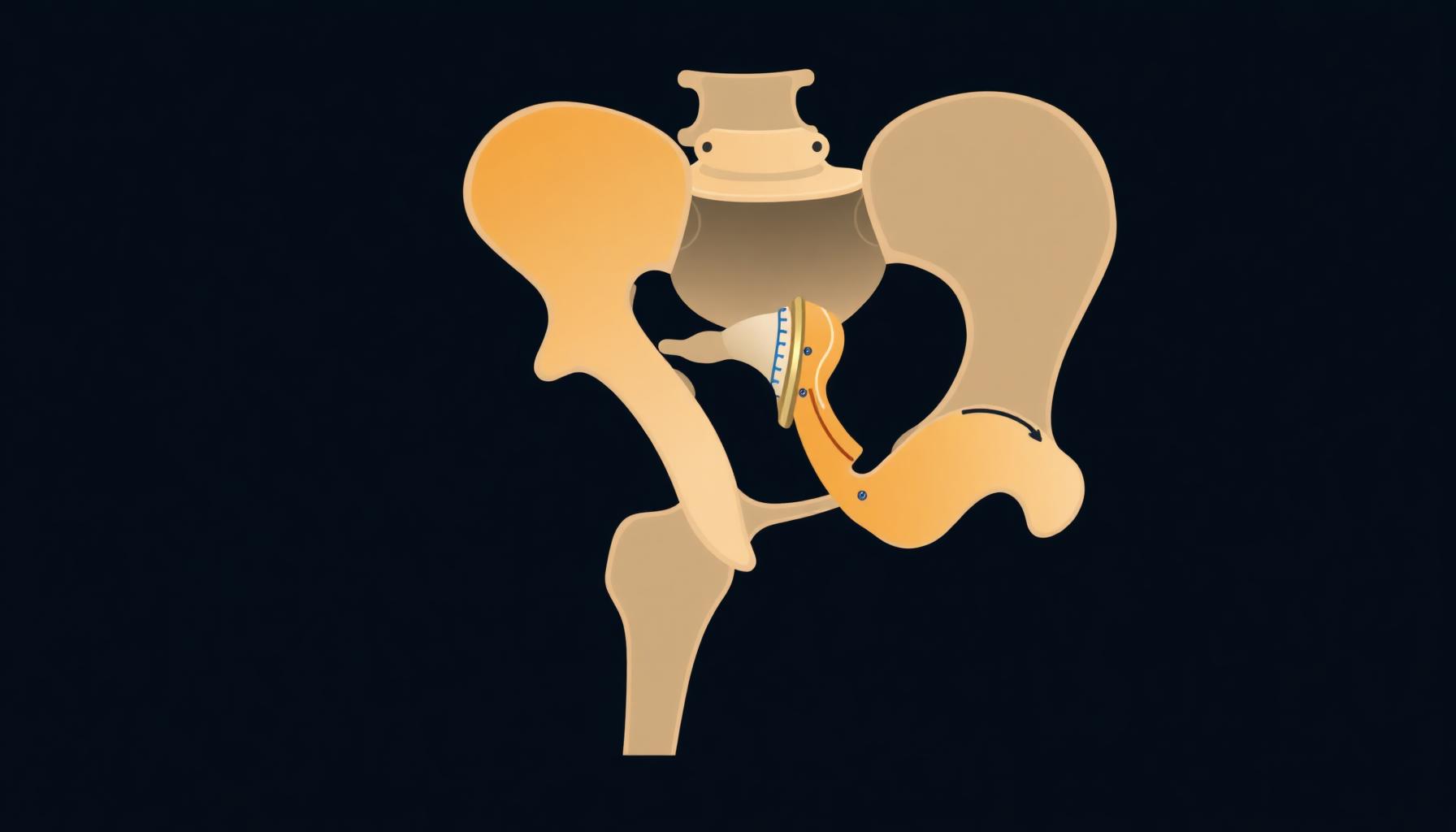
Hip replacement surgery with standard and dual-mobility techniques. Personalised solutions for the restoration of joint function.
The hip is a deep ball-and-socket joint, constantly loaded by body weight during walking, standing and virtually every daily activity. When osteoarthritis, avascular necrosis, fracture sequelae or other conditions impair its function, pain can become disabling and severely reduce quality of life.
Total hip replacement is one of the most successful surgical procedures in all of modern medicine. Prof. Simone Cerciello performs both primary and revision hip replacements, selecting for each patient the most appropriate implant and surgical approach: among the most innovative options, dual-mobility prostheses today represent a reference solution to dramatically reduce the risk of prosthetic dislocation.
Joint replacement with latest-generation implants and personalised surgical approaches.
Total hip replacement consists in replacing the damaged coxo-femoral joint with an artificial implant that reproduces its structure and function. The procedure replaces both articular components: the femoral head is removed and replaced with a spherical head (metal or ceramic) mounted on a femoral stem inserted into the medullary canal; the acetabulum receives a metal cup with a highly cross-linked polyethylene, ceramic or mobile bearing insert in the case of dual-mobility prostheses.
Hip replacement is indicated when pain and functional impairment no longer respond to conservative treatment. The main indications include:
The most widespread combination, with an excellent balance of wear resistance, longevity and versatility. Suitable for most patients.
Maximum wear resistance, indicated in young and active patients thanks to the extremely long lifespan of the components.
Specific configuration to dramatically reduce the risk of dislocation, with excellent results even in complex patients.
The most widespread internationally, provides excellent joint exposure and is applicable in virtually every clinical context, including the most complex anatomies and revisions.
A versatile approach with good joint control and reduced risk of posterior dislocation.
Uses a muscle-sparing access plane, exploiting anatomical intervals between muscles without dividing them. It may allow early recovery of walking and reduced post-operative pain in suitable patients.
The choice of approach is patient-specific: no single technique is universally superior — the appropriate one is that best suited to the individual clinical and anatomical features.
An innovative solution to dramatically reduce the risk of prosthetic dislocation.
The dual-mobility prosthesis is a technological solution of French conception (developed in the late 1970s by Gilles Bousquet) that has progressively become the reference standard for the prevention of prosthetic dislocation.
Unlike a standard prosthesis, in which the femoral head articulates directly with a fixed insert inside the acetabular cup, the dual-mobility prosthesis is characterised by two concentric bearing surfaces: a small metal or ceramic head fixed onto the femoral stem, which articulates inside a large highly cross-linked polyethylene mobile insert; this large insert, in turn, articulates with the inner surface of a metal cup fixed into the acetabulum.
The result is a system with two intermobile articulations: the inner 'small joint' is responsible for most functional movement, while the outer 'large joint' engages during extreme movements, increasing the range of motion before any mechanical impingement.
Prosthetic dislocation is one of the most feared complications after a standard hip replacement. Dual mobility dramatically reduces this risk, thanks to increased jump distance and wider range of motion before any impingement.
Two concentric articulations significantly increase the usable arc of motion of the prosthetic hip, reducing mechanical conflicts between components.
The system provides superior stability compared with standard configurations, even in the presence of anatomical, neurological or muscular risk factors.
Modern highly cross-linked polyethylenes offer excellent wear resistance, contributing to long-term implant longevity.
Dual-mobility prostheses are indicated in many clinical situations, and are increasingly used as the primary implant in selected patients:
In recent years indications have progressively expanded: some authors and reference centres use dual mobility as a primary choice even in younger patients, given the good long-term results and biomechanical safety.
| Standard prosthesis | Dual mobility | |
|---|---|---|
| Configuration | Single articulation | Double concentric articulation |
| Dislocation risk | Variable, from low to significant in at-risk patients | Significantly reduced |
| Range before impingement | Standard | Expanded |
| Optimal indications | Standard patient, no risk factors | Elderly, neurological, complex, revision patients |
| Expected lifespan | Over 20 years | Comparable, with modern materials |
The choice between the two configurations is defined individually, weighing clinical, anatomical and functional factors. There is no absolutely superior solution: there is the most appropriate solution for each patient.
A structured four-phase pathway, from initial assessment to full recovery.
Complete clinical evaluation: orthopaedic visit, laboratory tests, cardiological and anaesthesiological assessment, and any therapy optimisation. Dedicated imaging for personalised surgical planning.
Performed under spinal or, less commonly, general anaesthesia. Average duration 60-90 minutes. The surgical approach is chosen according to the patient's characteristics and anatomy. Average hospital stay 3-5 days.
Standing and first steps within the first 24 hours after surgery, with physiotherapist support and crutches or a walker. Weight-bearing is usually immediate and full, unless otherwise indicated.
Weeks 1-4: walking with crutches. Weeks 4-6: gradual weaning. Months 2-3: full autonomous walking. Months 3-6: return to selected sports activities.
Every patient is unique. The choice of implant — standard, dual mobility, with specific materials — and of the surgical approach is defined after a thorough clinical, radiographic and functional assessment, always tailored to your individual characteristics and goals.
Mon-Fri · 4:00 pm - 6:00 pm
The information on this page is intended for general educational purposes and does not replace a specialist visit or the physician's advice. Any surgical indication is defined exclusively after a direct clinical evaluation and the appropriate imaging. Content drafted in accordance with the FNOMCeO guidelines (arts. 55-56-57 of the Italian Medical Code of Ethics).