
A knee or hip replacement can be very disabling for the patient, also because of the long post-operative recovery. Prof. Simone Cerciello, expert in Orthopaedics and Traumatology in Rome, describes Fast Track, a type of surgery that can change the future of prosthetic procedures.
What is Fast Track surgery?
Prosthetic surgery of the large joints has seen an improvement in instruments and prosthetic design in recent years. More recently, greater emphasis has been placed on concepts such as pre-operative and perioperative patient preparation and information. The premise of this approach is that rapid recovery improves functional results, with fewer complications for the patient and a reduction in socio-healthcare costs. This is the origin of the "Fast Track" concept, which provides a patient-information pathway describing the various stages related to surgery and functional recovery. At the same time, multimodal pain control is implemented, including the use of L.I.A. (Local Infiltration Analgesia), with immediate return to assisted independent walking 2-3 hours after returning to the ward. Finally, a new perioperative care approach is adopted that reduces most of the negative stimuli for the patient, such as urinary catheters and joint drains, favouring functional recovery. All this is combined with meticulous control of intraoperative bleeding so as to virtually eliminate the need for transfusions.
What does the pre-operative phase consist of?
The pre-operative phase is a crucial moment. In a Day Hospital setting the patient undergoes a series of examinations and visits to define general health status and adopt the best treatment methods. All the medical documentation relating to current pathologies and previous surgeries is examined: the patient is asked to report drug therapies, any particular allergies to drugs and/or metals and previous anaesthesia complications. It is in this phase that anaesthetic techniques and possible therapies to treat post-operative pain are explained to the patient; ward nurses then provide the documents (family doctor's admission form, health card and ID) to formalise the admission and the instructions for surgical preparation (suspension/substitution of drug therapies, skin preparation methods and use of anti-slip stockings, elastic bands for physiotherapy and crutches). The advantages of Fast Track in the pre-operative phase are the possibility of not applying a urinary catheter, and the limitation of fasting and bowel preparation.
The day of surgery
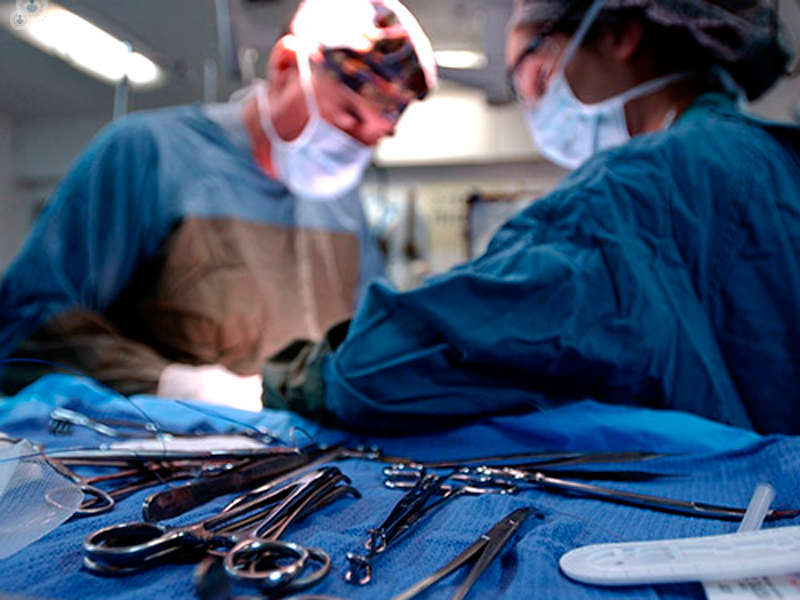
Early in the morning the patient is accompanied to the operating theatre, where the anaesthesia team is waiting to perform anaesthesia according to the methods agreed between patient and anaesthesiologist during the pre-admission (90% peripheral spinal and/or epidural anaesthesia with possible sedation). During the operation, great attention is paid to surgical haemostasis in order to minimise blood loss and therefore the use of transfusions with their associated risks. Once the operation is completed, cardio-respiratory functions are monitored and the patient undergoes X-ray control. Back in the ward, physicians and nurses evaluate any critical issues and observe the motor and sensory functions of the lower limbs.
The post-operative phase
In the afternoon after surgery, physiotherapists perform joint mobilisation exercises and, after assessing the patient's condition, encourage walking with suitable aids (front-arm walker or crutches). This is possible because patients are completely free of joint drains and urinary catheters. In the first two days after the operation, exercises are increased until the patient becomes independent — with the aid of crutches — in climbing and descending stairs and simulating getting in and out of a car. On the 3rd-4th post-operative day, based on general conditions (particularly haemoglobin level and body temperature), the patient is discharged home (when previously agreed) or transferred to a rehabilitation ward. Follow-up X-rays and orthopaedic visits are scheduled at discharge.